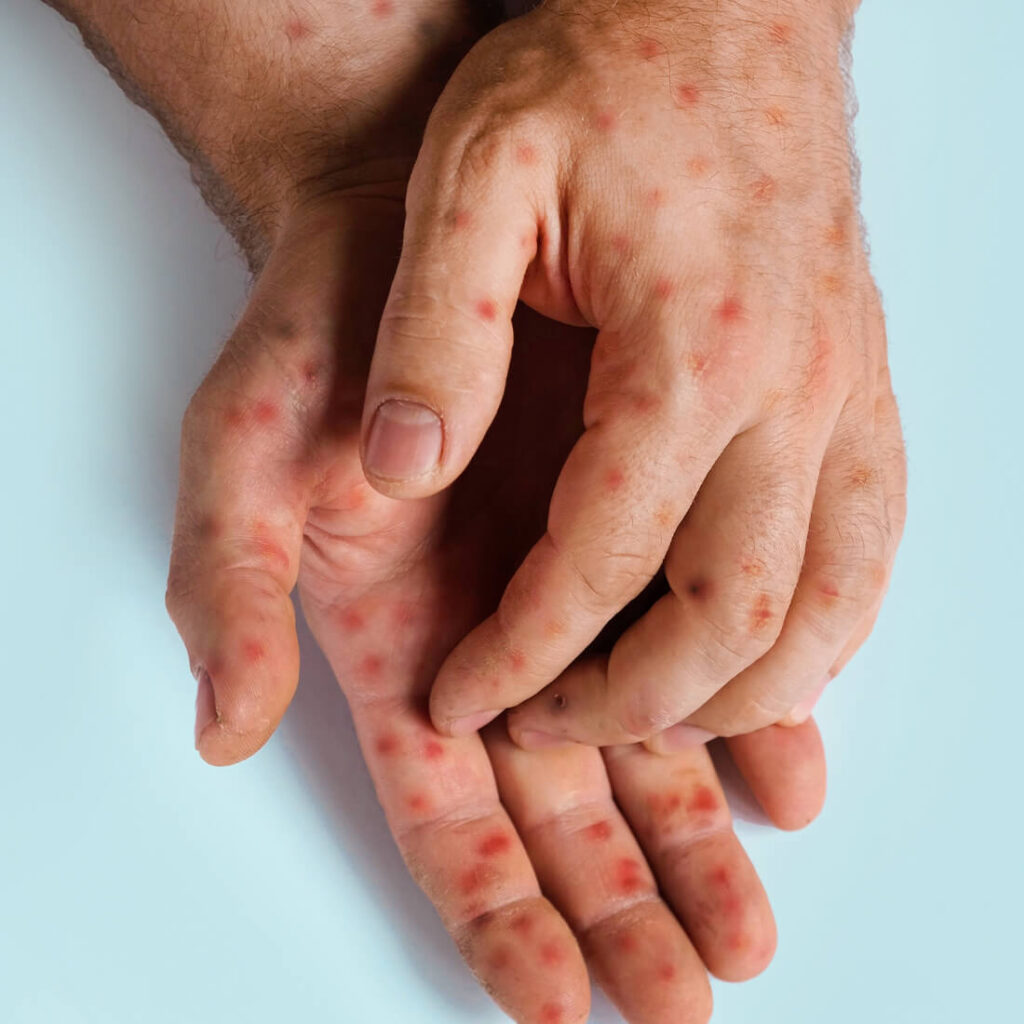
Chickenpox is a disease characterised by a red and itchy rash that later develops into fluid-filled blisters, which then crust over and form scabs before falling off.
It’s caused by the varicella-zoster virus and it is very contagious, so it’s important to self-isolate yourself or your child until all the spots have crusted over to help prevent the infection from spreading.
It is at its most infectious from one to two days before the rash appears and it stops being infectious once all the blisters have crusted over, which typically happens around a week after the rash first appears.
Before the rash appears, it is possible that you may experience some mild flu-like symptoms, such as nausea, a high temperature, headache, aching muscles, loss of appetite and a feeling of being generally unwell.
Cases in the majority of children are mild and the illness will most likely get better on its own. Adults typically have more severe symptoms than children and there is a higher risk of developing complications, as well.
The chickenpox rash will usually appear in clusters behind the ears and on the face, scalp, chest, belly, arms and legs. However, spots can also appear in the ears and mouth, on the palms of the hands and soles of the feet and inside the nappy area.
There is currently no treatment for chickenpox but paracetamol can be taken to bring down a fever, while cooling gels and calamine lotion can be used to soothe any itching you may experience.